Sunday, January 1, 2017

Upcoming Art Education PD - January and February

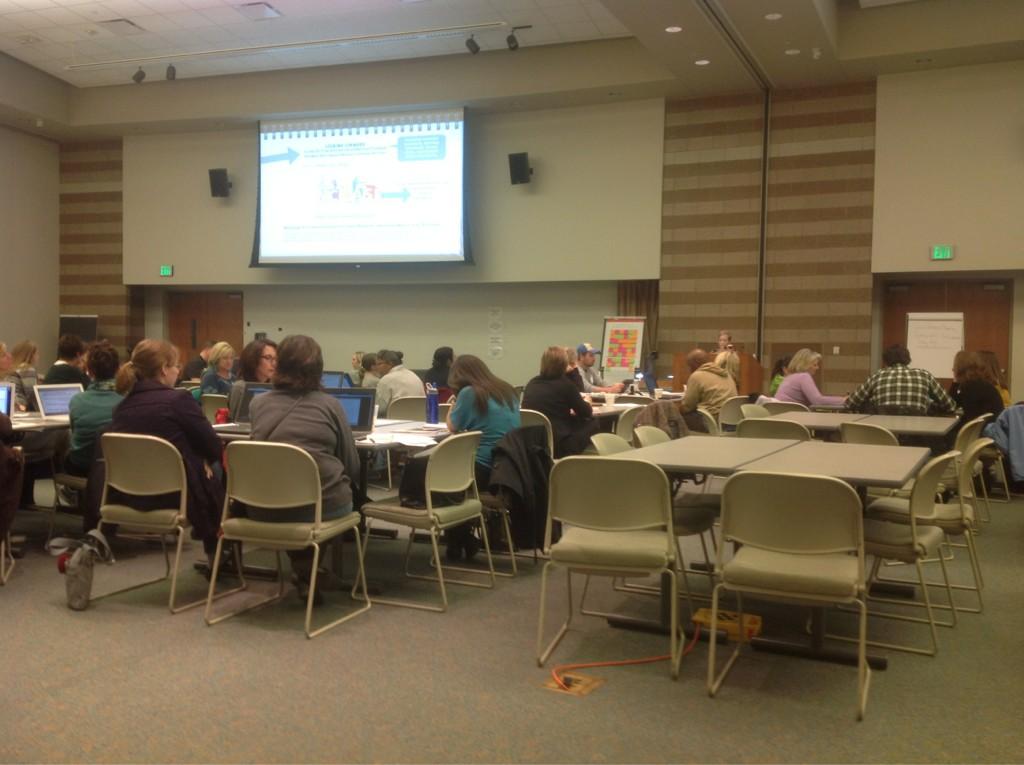
As we begin the second half of our school year it is a great time to keep your eyes open for upcoming art education professional development. Here are some of the inspiring art education opportunities coming up around the state and online.


January 20, 2017
Detroit Institute of Arts

Explore the permanent collection with DIA gallery teachers who will demonstrate techniques designed to encourage engagement and build critical thinking skills for students. Educators attending this event will also get an exclusive preview of the DIA’s new Lumin augmented reality tour and discuss ideas for using this tool with students on field trips. The DIA is the first art museum in the world to integrate this 3-D mapping and smartphone AR technology into a mobile, public tour.

February 4, 2017
Detroit Institute of Arts

In this 1-day workshop focused on 5th-12th grade art educators, participants will experience activities that bring writing into the art curriculum. Using the DIA’s collection as a classroom, we’ll use the morning to think about the artist’s journey, learn journaling and reflection strategies for personal and peer work, and draft an artist statement. In the afternoon, we will focus attention on writing about the work of other artists using the skills we’ve acquired. All sessions will be experiential and conclude with a conversation about incorporating the materials into your classroom teaching practice. At the end of the workshop, participants will leave with a set of activities that are intended to generate meaningful writing within the arts curriculum.


February 14, 2017
Grand Rapids Art Museum

Grab a glass of wine and experience a lively and unforgettable night at the museum! Discover the tribal designs of Michigan tattoo artist Leo Zulueta, then create and print your own wearable temporary tattoos. Learn about modern and traditional tattooing methods and experiment with temporary tattoos and henna.


February 18, 2017
Online

The Art of Education Conference provides great professional development online on a variety of topics. Here are some of the highlights you can look forward to at this winter's conference:


Some of the presenters include:

Mike Venezia - a talented author and illustrator who played an important role in the development of the 'Getting to Know' series. Mike will explain why he believes art - and art teachers - are so vital to our lives.

Kelly Phillips - Infusing STEAM Concepts into a TAB Classroom. Kelly will share some of her favorite ways to infuse the culture of STEAM into the art room! She'll share concrete examples of how she introduces STEAM concepts to her students in a TAB classroom, and demonstrate how these concepts can inform artmaking at every level.

Janine Campbell - Choosing to Change, and Changing to Choice. Moving away from the narrow view of what we are supposed to teach and what students are supposed to learn has transformed her teaching. Janine has challenged herself to instead give students the chance to find their own voice and connect to their work in meaningful ways. She'll share insights about what got her over the fear of change and what happened to her teaching when she said "yes" to choice.


Benefits to attending:

Some of the benefits of attending this conference include a goodie bag mailed to your door, you'll have access to the video presentations for a year after the conference airs online, you can attend in your pajamas, you can earn eight PD hours that count toward your SCECHs, TED Talk style presentations, etc...


Sunday, September 28, 2014

Michigan Art Education Association 2014 Conference - "Art in The Heart"


It's that wonderful time of year again. We are one month into the school year and are finally getting into a great rhythm. We are building relationships with our students and developing classroom culture. Our students are creating amazing artworks and starting to tap into their inner artist. And the annual Michigan Art Education conference is just around the corner! The workshops and conference festivities can be found at http://bit.ly/1pzS1CY.

Online registration has opened up. Further information can be found at http://bit.ly/1DNnwEb.

The art educators in Region 8 are super excited to see everyone November 13 - 16th in Lansing, MI. We have a wonderful conference planned! 

Some of the highlights:
  • Join us Thursday evening for the Broad Museum Tour and Social Hour 7 - 9 p.m.
  • Friday afternoon there will be a Gallery Crawl through some of our amazing galleries in Lansing.
  • Friday afternoon there will also be a Looking Glass: Fusing "Fun" Raiser from 1 - 4 p.m. Learn about fusing with this year's student scholarship "fun"raiser! When you register, sign-up for a fifteen minute session for Friday and create your own dichroic glass pendant. Learn to score, break & chip glass at the fusing table in the vending hall (10 am - 3 pm). You can pick up your fired work on Saturday from the vending area. 
  • Saturday morning's keynote will address Implementing the New National Core Visual Arts Standards: What Every Art Educator Needs to Know 9:30 - 10:20 a.m.
  • Saturday from 1 - 3:30 p.m. Frank Lloyd Wright Homes Tour Have you ever wondered what it is like to walk through a work of art? Then come and experience homes in the Okemos area created by master architect Frank Lloyd Wright. Hear the history of several homes from their current owners and gain their unique perspective of living in a masterpiece. 
This year's conference is filled with tons of fantastic workshops that include but are not limited to ways to invigorate your curriculum, ways to promote your program and gain administrator backing, what are and how to implement the new National Art Education Standards, ways to nurture your inner artist, art room technology integration, fantastic keynote speakers, and so much more! 

Additional ways to get involved:

MAEA ARTISANS GALLERY
Saturday, November 15, 2014
8:30 pm - 11:00 pm
At the Radisson, outside the Capitol Ballroom during the Kingdom Hearts Gala 

Email any questions to jillian.brunsting@gmail.com.    


      K-12 Ceramic Exhibition Presentation
      Include photos of your students’ work in the Kids ‘n’ Clay presentation at the conference. You won’t have to bring your student work to Lansing or worry about the breakage. Send a jpeg of student work as early as possible to Darcy Schreiber at: Kidsnclay2014@gmail.com


Guidelines:
·     Teachers may submit up to five pieces per level. Only one per student.
·     Please don’t send more than two images for each piece.
·     All pieces should be photographed with a white background.
·     Include Title, Student Name, Grade, School, Teacher Name with the images in the same email  as the jpg photos.

DEADLINE IS OCTOBER 3, 2014.


PHOTOGRAPHS NEEDED!

Please help us document the amazing experiences you will have at the 2014 MAEA Conference this fall in Lansing. We are hoping to capture as much of the conference as possible through your eyes. 
We’ve set up a Shutterfly account and we’d love it if everyone could take pictures throughout the conference and upload them to our Shutterfly account.

Directions:
1. Take pictures at workshops, meals, while enjoying Lansing, during conference meals, or at keynote speaker events.
2. Log in to our group Shutterfly account (You do not create a Shutterfly account.):
Email – ealfoster@gmail.com Password – maeaconf
3. Upload your pictures to the MAEA14 folder.
4. Enjoy the photos uploaded by other conference attendees. 

Questions??? - Contact Betsy Wellfare - ealfoster@yahoo.com

Ways to Volunteer
If you would be willing to volunteer at the conference (to take tickets, etc.) contact Adrienne DeMilner (adrienne616@gmail.com).

Garage Sale Reminder
Purge your classroom or home of unwanted teaching supplies. Bring donation items to the conference to sell (for a low cost) to people who may use them. 
The Garage Sale time and location corresponds with Region Meeting during lunch  at the Lansing Center on Nov. 15, 11:30pm – 12:00 pm @ Banquet 1-4.

Yarn Bombing
Please create Yarnbomb-ed items from your Regions for the Silent Auction – Bring them with you to the conference registration. Proceeds go to the scholarship fund. - 

Silent Auction Donations
Do you have art or craft you can donate to MAEA? Would you be willing to donate items for the Silent Auction? Maureen Roslanic (Retired Division Chair) is looking for donors. Funds raised by the auction will go toward the student scholarship fund. - See more at: http://www.miarted.org/#sthash.aYUZGuEC.dpuf


Projectors Needed!
If anyone one might have any we could borrow/check out in November for the week of the 9th through the 16th. They will locked up each night in a storage room for safe keeping. Help like this would really be appreciated!
Anyone interested in helping us out with this can feel free to contact me at gerej@gowcs.net.

Tuesday, November 26, 2013

Getting Good At Failing Big


As I was beginning my ninth year of teaching high school art I spent a good deal of time this summer reflecting on how the past eight years had gone. What were my frustrations? What were my successes? Which of my frustrations could be addressed and hopefully resolved and which needed to either remain on the backburner for another time or could be focused on and hopefully turned into successes. I deciding to tackle the concept of failing at creating art. The fear of failure is something we all face at various points in our lives. It can either stop us in our tracks or it can push us to new heights. I have faced this myself as an artist as well as almost daily in the classroom with my students. How can we get kids to stop worried about failing or ruining a work of art? Often the hardest part seems to be starting for some whether it’s a fear of screwing up something that doesn’t even exist yet or not even knowing where to begin. My new mantra this year has been “Trust your gut” and “Fail Big.” I have found that when I follow my intuitions I have the most artistic, as well as life, success. This has become an important lesson for me to pass along to my students. I encourage them to allow time to think about what they’d like to create within the guidelines of an assignment. Ask leading questions to get them thinking about all the possibilities out there. And when in doubt start with the first thing that comes to mind. This generally gets them started.

Inevitably they will all get the point where they are afraid to continue on with a work of art for fear of ruining it. That’s where the “Fail Big” philosophy comes in. It’s sad to admit this but it took thirty-three years for me to embrace this in my own art. I had this piece I was painting last spring that I loved. Then all of a sudden I did something where I hated it. I had a choice. I could stop there and let the piece of art die or I could give it some time, some thought, and with a deep breath I could find a way to fix it. After some experimenting and some courageous cutting I ended up with a mixed media collage that I love. I realized that by forcing myself to problem solve and find a way to make the piece work I ended up with an artwork that never could have existed without forcing myself to push through the hatred phase of creating.

This seems so difficult for students. They are so ready to claim a work ruined and discard it or stop working on an artwork before potential ruin could happen. Think of all the amazing works that aren’t getting created because students are letting fear stop them or letting failure stand in the way of finding a way to fix something. In an age of 21st century skills and the need to help our students develop into problem solvers this seemed like a much-needed focus for my classroom. I hung a large sign over the door that says “Fail Big!” and that’s what we’ve been working on ever since. I introduced the concept the first day to all classes and received many skeptical looks. I created a Fail Big place for artworks that were going to take a time out rather than allowing “ruined” works to go into the garbage can. This could allow some other student to come along and see a future for one of those pieces or for it’s original owner to reclaim it one day and give it new life. This step of the process hasn’t happened yet but the other results of implementing this have been astounding. We now celebrate failures as experiments. The students know that when they try something that might not work it’s a chance to learn something new that could be used in future artworks, even if it isn’t necessarily successful in this piece. When someone adds something to the pile we cheered at first as they gradually accepted the idea of embracing art failures. And now I hear all over the classroom students discussing ideas for how each can problem solve their way through an artwork, encouraging each other to push through toward success, and when something truly doesn’t work discussing how that technique or idea could work in a different art context. It’s amazing! And the art that’s coming out of this is so much more creative and daring than it had been in prior years. All in all I’d say that we are succeeding at failing and I hope future semesters of kids embrace these ideas as well as these groups have.

Thursday, October 24, 2013

Conference Season: What to do if you can't make it

Artist Name: Amanda R
Every Fall I look forward to attending the MAEA conference. I know I will walk away feeling energized and full of ideas gleaned from sessions that are both relevant and will have great impact on my students in my classroom. Unfortunately, I am not able to attend this year's conference. If you are like me and staying home this weekend, here are three ways to plug into what is happening in Art Education even if you cannot always make it to the conference.

  1. Check out Online Conferences. With the use of Webcams, Screencasts, and Videos, there are several websites that are offering conference experiences for Visual Arts teachers who may not have the funds or flexibility to travel to their State or National Conferences. Websites like The Art of Education (which is offering a Winter Conference featuring a variety of sessions) and The Education Closet (which offers monthly Master Classes that are hosted by Arts teachers on various topics in Arts Education) are making it easier for teachers to catch up on Professional Development without having to leave their homes. A free conference that has resources from a variety of content areas that I have also presented for is the K12 Online Conference. Dating back to 2008, you can search through their videos and catch up on a variety of hot topics in education with several sessions created by Visual Arts teachers from all grade levels. Although this does not replace the time spent face to face with other Arts Educators from across the State, it does offer an alternative for those (like me) who are missing out this year. 
  2. Turn to Social Media. Even if I am not there, I can follow along with my colleagues and friends through their news feeds and capture bits and pieces to be inspired by through the magic of Twitter and Facebook. Although it might seem like you are being a secret stalker, take to your feeds during conference weekends and examine the pictures of demos, projects, and quotes that your friends are sharing. If something piques your interest, then favorite/like it and make note to ask more questions of your friend once they return from the conference. I have already gotten a lot of great ideas from friends in Indiana and New Jersey, whose Art Education Conferences were held earlier this month. Even though I was not there, I was able to share in some of the highlights through interacting with my attendee friends in our Social Media connections.
  3. Plan for Next Year. It may be too late to attend this year's conference, but it is a great time to start planning for next year. In 2014 the conference is going to be in Lansing. Don't wait until the last minute to decide to go; instead, use the year to start saving and planning and getting ready to learn and share next Fall. 
If you are going to the conference, please share your resources below so that others can learn along with you, too! What makes for a great conference and what are some of your favorite MAEA moments of year's past?


Saturday, August 17, 2013

You're it!

Last May I had the opportunity to attend the TEDxGrandRapids Livestream for Education event at Kentwood Fine Arts Auditorium. As we prepare for this school year, I wanted to take a moment and reflect on one particular speaker that has stuck with me throughout that day and over the summer.

The theme for this year's event was "Tag, you're it!" That feeling was all around as we were encouraged to engage in conversation throughout the breaks in the day, participate activities like decorating lunch bags for the Kids Food Basket, or while listening to the speakers illustrate the power of being "it" for someone.

Although I took away great messages from all of the speakers who discussed ideas both big and small, it was Simone Ahuja's story of Mansukh Prajapati that had the most impact on me.

Rather than write about it, I think it is best watched here:


I am sure that there are moments within this that stuck out to you, too. As an art teacher, clay is a media we use for so many things. We use it to make decorative sculptures, molds, functional items... but not until I saw this story of how this material was "reframed" did I see what an impact it could have on a community and change their lives.

As I prepare for the start of school in the next few weeks, I am going to think about this story and how I can reframe my own situation to include innovative and creative solutions that help students find their potential and explore their ideas. I am going to share this story with my students and encourage them to embrace the moment they are tagged to be "it" for somebody.

What are you doing to prepare yourself for the upcoming school year? What pieces of motivation are you bringing with you to help foster learning in your classroom? How are you going to be "it" for your students this school year?


Tuesday, July 2, 2013

Summer PD


MAEA Logo
 
MAEA SUMMER 2013 PROFESSIONAL DEVELOPMENT WORKSHOPS

The Michigan Art Education Association in collaboration with Western Michigan University and Finlandia University invites all Michigan art educators to participate in the Summer 2013 Professional Development Workshops, recognized in 2009 as an NAEA Co-Sponsored Academy.

Running from August 4 - 9, participants can select from seventeen 1, 2, and 3-day workshops with topics that range from studio practices to pedagogical innovations. In addition, we are honored to collaborate with the historic Pewabic Pottery in Detroit, location of a special workshop on once-fired ceramic techniques for the classroom.

Earn SCECHs or graduate credits, or come to simply renew the artist within and share ideas with art teachers from across the state. SCHECs will be awarded at three times the usual rate, so each 10 hour workshop will yield 30 SCECHs that can be applied to certification renewal or professional advancement.

For links to a detailed catalog of workshops, online registration, and lodging information please visit the MAEA homepage:www.miarted.org. For the best deal, take advantage of early-bird registration through July 9.  

For more information, please contact Bill at william.charland@wmich.eduregarding workshops at Western Michigan University, or Melissa atm_hronkin@hotmail.com regarding workshops at Finlandia University.
 

Sunday, June 23, 2013

Make an Impact

MAEA 2013 Elementary Top 15: Gabriella R.
Washington Elementary

In many cases Art is the first on the chopping block when school budgets are tight; it can be easy to fall into the trap of anger over the cuts like the ones that were made in Lansing Public Schools. For many kids, Art is their time to shine and express the things they cannot in any other way. Art is the place where students can apply the learning that happens in other classes and give their learning meaning. And it is not enough to just get a class called Art - Arts-specific teachers are necessary to the development and implementation of Arts instruction that fosters the creativity and development of the whole child. When decisions are made that undermine this, it can be both frustrating and disappointing.

Instead of getting into the same arguments about this, I am going to propose something else. Get involved with the public review of two major Arts education documents that speak to the power of the Arts and give clear pathways to achieving quality programs. 

1. Michigan Arts Education Instruction and Assessment Blueprint Public Review: 

This Blueprint outlines the Gold Standard in programming for Music, Dance, Theatre, and Visual Arts. The document is open for public review until June 30 and you can help shape this document into its best possible vision for the future of Arts education by filling out the survey with your ideas and input to make it better. 

2. National Coalition for Common Arts Standards Public Review: 

The public review for the NCCAS work will be available on June 30th here. You can read an overview of the framework for developing the new standards here.  To get started thinking about the new standards, you can view many informative resources including this Matrix that outlines the Conceptual Framework for Arts Learning.


One way to move forward and build stronger programs is to chart new pathways to get there. How do you think these documents will help Arts programs moving forward?


Thursday, March 14, 2013

One thing... NAEA 2013

I have never been to a National Art Education Association Conference. Now that I have, I can completely understand why people go back year after year, saving up their dollars to try and make it happen. It was a great experience with wonderful presenters, sessions, and workshops and time to speak and learn with teachers from across the country.

Although there is plenty to share from the conference, I am still trying to process through it all. So, instead of giving every last detail I am going to select an image and share the big idea from the presenter/workshop/session. I hope to have time to delve a little deeper into some of the themes I am going to share, but I think this is a good starting point:

Craig Roland, Ian Sands, Tricia Fuglestad, and Elizabeth Delacruz presented on being a part of a PLN (Professional Learning Network) through the use of online tools.Big Take-away: Being Connected allows you the chance to share and learn from anyone at anytime and grow professionally. 
One of the many stations in the Vendor Hall.Big Take-away: There were lots of chances to try out new and interesting materials - Apparently they make such a thing as watercolor  crayons! 
Teachers sharing about the Heart Houses/Haiti Houses projects.
Big Take-away: It is important to connect with teachers from around the country to see how they work with similar or different ideas, materials, and teaching situations.  

Ian Sands and Robert Sandagata's presentation on New Weird Ideas.
Big Take-away: Failure and risk-taking are a part of being creative and making art; do not be afraid to allow your students this opportunity in the pursuit of making something new.


Transfer Printmaking

Learning about monoprinting with Julia Healy.
Big Take-away: Interesting process to create portraits and investigate people's histories within a community.


Jesus Moroles speaks about his work as a sculptor.
Big Take-away: People don't know what they want; it is the job of the artist to show them.

Discussion with Wayne White, artist featured in the documentary "Beauty is Embarrassing".
Big Take-away: Art should flow between media - a sculpture is a drawing, a drawing is a painting, a painting is a puppet, a puppet is a performance - and it is all connected to experiences. 

Michael Reyes with his High School Art Teacher who entered his work that received a National Scholastic Award.
Big Take-away: Art teachers have the power to change people's lives and help them realize the power they have within. 
Brandon Foy spoke about how his National Gold medal from Scholastic changed his life and prepared him for his future as an artist and creative.
Big Take-away: Don't be afraid to work hard and put yourself out there; his viral YouTube video landed him a job with Microsoft in his early 20s.

New Leadership team for the NAEA
Big Take-away: There are a lot of exciting things to look forward with NAEA - including the next conference in San Diego, 2014!

If you have a favorite moment from the 2013 conference, please share below with a link to images/posts/resources. What did you think of the event? What were some of the things you learned and how will they help you back in your classroom?

Tuesday, February 19, 2013

Flipping Art Education

Flipped instruction is something that has been gaining interest in my district for the last couple of years. Flipped instruction is when you use a combination of online and face-to-face interaction to deliver content. There is a variety of methods to this and rather than re-explain, you can see them here.

One question that comes into play when thinking about Art Education, is how can you flip it? Or maybe better: Why would you want to? Art class is so hands-on, what really can flipping instruction do to benefit instruction in an art room. Here are 3 ways to Flip Art Education:

1. Sub plans: Nothing is worse than trying to prepare Art sub plans. More likely than not, the person coming in to take over has little to no experience using Art materials and the students are probably going to have a hard time figuring out what to do without your guidance. A couple of ways to combat this through the Flip model is recording a video of yourself explaining what needs to happen for the Sub to show students (or if the kids have access to computers, they can watch it at their own pace). That way they can see what you want them to do and the expectation is more clear than a sub trying to decipher your notes. I also tell students to email me when I am out if they hit a snag in a project and I try to talk them through it via email. It makes the students feel in control and me at ease when I am not there.

2. Snow Days: Today was the 5th one in my district. I am not complaining, but it does mean that I have lost a week's worth of instructional time with students. Instead of completely giving up on a lesson or presentation that you were planning to give on a Snow Day, you could create a video recording of it and email it to parents/students to view before returning to class the next day. I try to keep videos like this to ten minutes or less. It never takes the place of me being there in class and not all students will take the time to view it, but it does offer students the opportunity to get prepared for when we return to class the next day. Those students who do view can then take the lead in explaining the process and help others get on track with what we are doing.

3. Differentiate Pacing: What do you do with the student who is always ready to move onto the next assignment? What about students who are gone on vacation or sick? One thing you could offer is the resources for the assignment online. I house all of my projects on our Moodle page and students can check out what we are going to to do next when finishing their current projects. Sometimes I will make videos available that showcase an artist or go through a presentation I or other students have prepared. This allows students to move ahead when they are ready or get caught up if they are behind.

Imagine less time lecturing or presenting about Artists in class and more time for making Art. What might happen when students share their learning with parents by watching those presentations at home? Think of the potential this type of model offers the Art classroom when it is employed effectively. There are many tools you can use to create screen castings or videos. Two I frequent are Camtasia Relay by TechSmith and Quicktime on the Mac.

If you are interested in learning more about this type of instructional model and would like a chance to talk technology with other forward-thinking teachers, check out the upcoming PD at the GRAM this Saturday - it is only $5 for MAEA members. If you have used this type of instruction in your classroom, what are some tips or tricks you can offer others? If you have not, do you think you will? What are some potential issues that you see from using this strategy?


Friday, January 11, 2013

Transforming Minds

Happy New Year! Even though I say I am not going to, it seems like every year I get sucked into some type of resolution. I start out with good intentions and usually somewhere around March realize I had gotten off track.

A couple of years ago, I started my class blog  as a New Year's goal. It has been my most successful New Year's venture to date. I find the documenting of student growth and work to be a great reflective tool for myself and something my students enjoy as well. That is why I was excited to spend my first Saturday of the year with Art teachers in Oakland Schools, talking about technology, assessment, and how they can work together in the Visual Arts classroom to meet a variety of needs.

Claudia Burns also presented at the Transforming Minds conference on the topic of assessment. Her helpful resources will soon be available on the MAEA website.
Claudia Burns presented at the January 5th conference in Oakland on the topic of Assessment.

As we move into 2013, the topic of assessment is going to be more and more prevalent. We have to figure out how we are going to document student growth that will be put towards our evaluations. Claudia has really helped get the conversation going, by providing examples of assessment tools and sample assessments that could be used in the classroom. I hope to add to the conversation by providing examples of how the use of technology can aide in our effort with documenting student growth through my collaboration on this blog and others.

In addition to blogging, I also document the efforts in my classroom through Artsonia. This online gallery offers teachers a place to house digital images of student work over the course of their schooling career. Imagine being able to have students go back after years and reflect on their progress in various aspects of art making. I also use Google Forms and Moodle to create tests that help me quickly assess student knowledge, without having to spend time manually grading them. If you are interested in learning about any of these tools, you can find me at the January 19th Flip Teaching Conference at Byron Center High School. The event is free and lunch is provided - what more can I say!

If you are interested in helping shape the future of Assessments in the Arts in Michigan, you can apply to participate in the Michigan's Model Arts Education Instruction and Assessment Project. The deadline for application is January 21st.

What are some ways you are using assessment to document student growth. What are some tools available that help you show student growth?


Monday, December 3, 2012

Documenting with iPads

My school recently passed a bond, which has allowed major technology upgrades to our classrooms. As a part of the equipment brought into the classroom, teachers were given iPads and taught basic methods of using them to deliver content and create resources for the classroom. I had been wanting an iPad for quite a while; there are so many great teachers who implement their use in the Art classroom and I wanted to do the same.

Unfortunately, since obtaining the device my creation of "art" has not been as frequent as I would like - since I do not have a class set to use with students, I have not done as much with production other than using it to take pictures and video and make presentations for class. Although my digital paintings have been sparse, the impact that simply documenting work with the iPad has made a tremendous difference in my ability to reflect on what I teach and how students work daily.

Artists Name: Katie M.

School: Grand Ledge HS

I recently spoke with a colleague who had been evaluated and mentioned how they wished the administrator could have been there longer or at a different time. We have all been there. I know I have. That feeling got me thinking about how I can use the iPad within the teacher evaluation system to show more than just a snapshot of what happens within my classroom. Instead of just looking at a short period of time when the administrator was able to come in and observe, by taping various projects or segments of learning, I can start offering a more complete and better representation of what happens in the classroom. When using this in during the review of a classroom observation, it can reveal different experiences that occur and help give a more complete picture of what it is you do as a teacher.

I think that is why I appreciate blogging so much as a part of my daily practice. It offers me a chance to give a complete picture of what happens in my classroom and hopefully allows others a chance to understand what it means to be an art student in my school. I also get a chance to reflect on what worked and what didn't, which impacts what and how I teach in the future.

How do you use iPads in your classroom? Do you document learning activities through blogs of videos and have you used that to impact your evaluation? I am interested in hearing from others on this topic as it is something I am just starting to explore. I look forward to your comments and learning more about how you approach the documentation of learning in your own classroom.


Sunday, November 18, 2012

Chance Favors the Connected Mind


It’s been three weeks now since I came home from the conference weekend in Traverse City. So much has happened since then: the elections, the quarter ended, grades had to be completed, new lessons begun.

On Friday, Jan Cramer from Battle Creek posted on Facebook: “Tests and projects graded, 50 Kindergarten empty bowls drying, student holiday art/cards matted and framed, PLC meeting agenda copied, kiln loaded and firing, materials ready to go for Mon. and Tues....this is how I spent my Friday night.” We can all relate to her post, can’t we?

Amidst all the complexities of life I crave and cherish tranquil moments—moments that I allow myself for creative reflection. Recently I came across this video by Steven Johnson, considering “Where Good Ideas Come From”, also the title of his recent book.

We can look at Facebook or Twitter or Pinterest or texting or any other form of communication as a distraction, another complexity but then again we can consider them connectivity, which is what the 21st century is all about, isn’t it?

One of my biggest challenges in my role as MAEA High School Division Co-chair is that very notion: other than at the conference how do we connect? I see this blog as a tiny possibility that could grow into something far more than it is now. Jeanine has set the blog up so that we have tabs for each level: HS, MS, El. And now: Assessment. Lots of teachers are concerned about this area. So let’s talk about it! Let’s take advantage of this way of connecting.

And if you have an idea, a hunch, bring it up, and maybe someone else will have a hunch and maybe those hunches will collide, mingle and create new forms.

So here’s the plan: I will set up a schedule for high school teachers to start the ball rolling. I already have ten of you interested in writing for the blog on occasion. I’ll e-mail you and set up a schedule. It can be an interview, a lesson idea, a student success story, or simply a creative idea that you want to talk about. Let us know if you want to join the party, if you want to write, e-mail me.
If you are an elementary or middle school teacher we have a tab for you, too!

But what I’d really like to see is dialogue after the authors post an article.
Voice an opinion, an affirmation, start a disagreement, share an example or tell a story. We’d love to hear your voice! Claudia: burnsc@aaps.k12.mi.us

Wednesday, November 7, 2012

What did you Learn?

It has been a couple of weeks since the MAEA Fall 2012 Conference, and I am still sorting through bags of handouts, sample materials, and pictures that are filled with great ideas and classroom inspiration. This conference had it all - great views of Traverse City, awesome sessions with expert teachers, and loads of ideas to take back and implement into the classroom. Here are a couple of take-aways that will be helping me through this year:

1. Assessment: Claudia Burns had a great Thursday night session on Assessment where teachers were able to share how they are working with the new evaluation requirement to show student growth. Teachers gave examples of how the implement both formative and summative assessment tools as well as the resources they use to help with pre and post testing. You will notice a new tab on our blog labeled "Assessment" - Claudia will be putting resource materials on there to help you get started or advance your understanding of how this works in an art classroom.

2. Creativity: There were several sessions that had creativity at the heart of it. Adam VanHouten, September Buys, and Cindy Todd gave presentations dealing with aspects of creativity in the classroom. I enjoyed learning about various methods of instruction to help foster innovative thinking. Both Adam and September used www.prezi.com to create interactive presentations on how they apply this in their classrooms.

3. Workshops: The amount of hands-on opportunities this conference did not disappoint. Sharon Stratton gave an awesome workshop that not only gave great resources for using unusual materials like tar paper, bleach, and soap to make awesome works of art, but also included pop-rocks in her presentation (which was a sweet surprise). The vendors also did not disappoint with their samples and make-and-takes which helps when deciding if you want to purchase products on display.

4. Data: One of the best moments was the presentation by Dr. Root-Bernstein. His keynote on the link between the Arts and everything else put hard facts and figures to something we always have felt to be true: that when you invest in the Arts, you are investing in all other aspects of learning. It was a great talk and I look forward to reading his book that goes into the topic further.


Overall, this was a great conference to attend. It was full of information and moments to connect with others. Conferences like these are important for our profession. What was your favorite part of MAEA 2012? Please share links, pictures, and information below so we can archive the highlights of this year's conference.

Thursday, October 25, 2012

Ready to Go!

Today is the start of the annual MAEA Conference and I am so excited! It is a great time to connect with other teachers from around the state and share information on what works best in Art Education. It is a time where I learn so much from my peers and receive the valuable resources that allow my classroom to thrive and grow.
Artists Name: Samantha J.

School: Heritage HS

If you are attending MAEA this weekend, here are some tips that I have found helpful when attending any conference: 

1. Have a plan: Go through the Conference booklet (available online) to help plan out what you want to attend and when they are taking place. Also have a back-up plan in case your first choice fills up too quickly. With the new mobile feature on the MAEA site, you can easily do this through your smartphone or tablet.

2. Ask questions: If you attend a session and you want to know more about something that was said by the presenter, make sure to ask. As a presenter, I want to make sure my presentation is relevant and helpful to the audience. If there is something that you want to know more about, just ask. 

3. Check out the Vendors: I think my favorite part is checking out the booths from the great Vendors that come to MAEA. Not only do you end up with bags full of samples, but there are opportunities to participate in "Make and Takes" and talk with knowledgable spokespeople from the companies represented. If you have questions about purchasing supplies, new equipment, or other resources, this is a great time to connect and research through first hand experience. 

4. Student Work: Make sure to take the time and check out the great student work on display. I am always amazed at the talent and creativity each year during our conference. It is also a great time to get ideas from other teachers by seeing how they taught a lesson so you can adapt it in your own classroom. 

5. Tweet it out: Please use the hashtag #MAEA12 to tweet any important ideas or information you gained from this conference. This allows ideas to be shared from a variety of sessions - it will be like you can experience being in more places at once! When the conference is complete, I will post the resource here so that we can all enjoy the conference over and over again! 

I hope you have the best experience this weekend at the conference. If you are unable to attend, follow #MAEA12 to get updates on the new lessons learned throughout this weekend of learning and sharing in Art Education.

Sunday, September 30, 2012

Partnering with Parents

2012 State Adjudication: Laura B.
As we get into the grove of another school year, there are all kinds of demands that come along with the job. From organizing student work and supplies to participating in displays, shows, and competitions, there is a lot of work beyond teaching to do as the school year gets into full swing. One thing that I always find challenging during this time is figuring out how to engage parents into helping with these extra events. As an Art teacher, especially in the elementary level, you may have well over 500 students to keep track of throughout the year. It can be difficult at times to juggle rotating displays, depleting supplies, and mountains of papers that result.

Instead of bearing the burden on your own, here are a couple of ideas on how to enlist parents to help along the school year:

1. Just Ask. Parents are interested in what happens in their child's school and there are many who would love to spend a day in the Art room helping organize materials, displays, or assisting with students. To make this a successful experience, make sure you have a specific idea of what that parent will be doing when they come into your classroom as well as communicate those ideas beforehand to make sure you are both on the same page.

2. Communicate your needs in multiple ways. Email is just one way to communicate with parents about activities that are happening in the classroom. You can also start a blog, create a twitter account, or a facebook page to help keep parents connected (make sure you comply with your school's technology policy first). If you participate in Artsonia, you can use their newsletter feature to be emailed to parents and then embed the form in your blog or website.

3. Take a poll. Google forms allows you to create a survey to share and gather information from others. I recently created a survey for parents to see how they feel about how the school year is going so far. The form automatically calculates the data and shows it to you in graphs or charts. This allows for parents to share their ideas and for you to get quick and honest feedback.

Do you have a great way for getting parents involved in your classroom? Please share your ideas below and help make this school year one filled with positive involvement!

Wednesday, August 15, 2012

Mattawan Tech Camp 2012

Artists Name: Christine M.

School: Northview HS
From Video Game Design, to management tools like Class Dojo, and an endless amount of Free resources for consuming and creating content - the Mattawan Tech Camp offered a little bit of everything for the teacher looking to add digital tools to their curriculum.

The event kicked off with a lively and thought-provoking Keynote from Rushton Hurley, whose presentation title included the words "Kicking Posterior." As an advocate for the power of digital tools in the classroom, Rushton shared his passion with the crowd and offered the impact we can have in our classroom if we allow students the chance to create and share content through the video production. 

He continued this discussion in his sessions by offering us a load of free resources as well as things to think about. One thing I learned involved the search function in Google. Maybe you already knew this, but I hadn't ever seen the advanced search option in Google - did you know you can search for specific file types? He had us search for PowerPoint presentations using this method. If we can do this, so can our students. This got a lot of us re-thinking the presentation tool and how we can use it as a way for students to see what other students have created and synthesize it into something of their own, like a video or even use what they find to write a critique or summary of the presentations.

 I also appreciated the resources page filled with tools that I was seeing for the first time. One such tool is called Psykopaint. In this cloud-based program, you can upload pictures and then select artist styles ranging from Seurat to Van Gogh (and more) to paint your picture. You really have to check it out to see what I mean.

I had the opportunity to present at this conference, too. I discussed how I have used Video Game Design in the classroom. Sometimes as an Art teacher, I get a little narrow in my definition in what I should be teaching; Art History, drawing, painting, sculpture, and ceramics are key, but I have opened up to the idea that animation, video, digital arts, and video game design are also important aspects in Visual Arts education. You can check out the Video Game Design page I created for the conference filled with links to important sites about how this skill can effect student achievement as well as how students can make them and various competitions students can enter. The Scholastic Art and Writing Awards will begin to accept games starting in September, so consider this as you start planning your curriculum. And if you don't know how to program or design a game, it is okay - you can still create a space that facilitates that learning for your students. I know that is the case in my classroom, at least.

Have you learned something at a Edu Camp this summer? Please share any new skills, tips or tricks below.

Monday, August 6, 2012

Gearing up for Another Year

Artists Name: Samantha V.

School: Lakeview HS
In about a month, our classrooms will be filled with kids ready to dive into projects and materials. If you are anything like me, then you have been thinking about that for quite a bit of the summer and maybe have already had a few of those pre-school nightmares (you know the one where you end up with a class full of students revolting against your lesson or you run out of a needed material and no back-up plan).

Here are a few things that ease my stress when thinking about the new year:

1. Seating Charts - It is a simple thing that always does the trick for me when it comes to easing my stress over the start a new year. If you haven't checked out The Art of Education yet, you really should. In a recent post about seating charts, there are a list of great ideas for creating and organizing them. To add to their ideas, I would also include using sticky notes for student names on the charts (as shown here). This allows you to only have to write it once and simply pull it off the paper and re-stick it to a new location when changing seats. I always have my seating charts done before the first day and greet students at my door to introduce myself and tell them where their seats are located. If there is an issue with a seating arrangement, I can quickly pull the sticky note with the student's name and easily place it on a new spot on the chart.

2. Artsonia - I have been using this free online resource since 2007. I always try to get my classes organized before the new year with their rosters function and the fact that they allow kids to "graduate" into the next grade, makes that super simple. In addition to serving as a way for my students to share their work with the world, Artsonia does so much for helping raise funds for my classroom, supply ideas and tools for lesson planning, and documenting student growth. With the expectation of documenting student growth as a link to teacher evaluations, there's a lot of questions about how to do that in an art classroom. With Artsonia, documentation of growth is more manageable through the evidence of student artwork and accompanying artist statements. Artsonia has also added a lot of new features this year, as explained by Suzanne Tiedemann here.

3. Twitter - So, this is a new one that I am adding to my back-to-school regimen this year. I have been using this resource since Tricia Fuglestad urged me into it and I am so glad she did. I have been able to connect to teachers and artists from around the world that have enhanced my growth as a teacher. If you are on the fence about it, just check it out and see for yourself. Here is a post about how twitter is revolutionizing the concept of Professional Development and one specifically about how it works in #artsed.

What are some key things that help you get prepared for school and out of the pre-school jitters? What is a tool or trick that you cannot live without? Please share your thoughts and ideas in the comments below.

Thursday, July 26, 2012

Getting to the Core of Arts Standards

As the summer winds down and another school year starts, many of us are looking for new and engaging lessons that both capture our students' attentions as well as teach them valuable skills that they will use to grow as an artist and person. When I am developing lessons, I use many factors to determine artist, material, and subject being covered. I consider what is being taught in other content areas as discussed in this past post, I also consider the student population and what they are interested in learning through the use of Google Forms discussed in this past post, and I pour over the Michigan Content Standards and Benchmarks that can be found here.

Just as all subject areas are moving from various State level Standards and Benchmarks to the Common Core, the Arts are also being revamped through the National Coalition for Core Arts Standards. This group consists of teachers from various Arts disciplines who are working together to create "the Next Generation Arts Standards." In addition to including videos and documenting the progression of their work, the group is also looking for contributors to add to the discussion. You can find more information about this on their wiki as well as see that Michigan is being well represented in the Visual Arts group by 2012 NAEA Middle Level Teacher of the Year, September Buys.


Some pieces of information I found particularly helpful when looking through their site was the draft for the Overarching Framework as well as the Review of State Arts Standards. I highly recommend giving them a look if you are as interested in developing curriculum using outcomes as a guide via backwards design.

Even with these guides, the possibilities are endless as far as what and how we teach Visual Arts. It is hard to know what is the right way because there are so many different ways to do it. What are some things that you use to help guide you through the development of lessons? What lesson do you do each year that you feel is able to hit all of the marks both with content and artistry? If you have any helpful suggestions on how to create and execute lesson plans, please share below.

Monday, July 9, 2012

Lifelong Learning

Artists Name: Stella Lee
School: Northview High School
I recently engaged in a relatively short discussion with @wmchamberlain (one of many teachers I follow on twitter) about lifelong learning. The discussion started with a question he posed asking what people were learning over the summer and I responded by describing that I have spent the summer teaching myself how to sew (with the immense help of both youtube and books ordered from Amazon). He shared that he was experimenting with art making. I pointed to a website that I thought might help in his journey and he gave me some encouragement, too.

Even though the "conversation" lasted a few lines back and forth, it has got me thinking about the concept of lifelong learning and how we engage students in this. It also got me thinking about how I engage in my own learning and what motivates me to want to learn new things.

I have always had an interest in how things are made. It is one of the reasons I wanted to be an artist and it is also why I wanted to be an art teacher - I also enjoy teaching others how to make things. I have had a sewing machine since 2006, but did not start using it until about a year ago. Why did I not learn to sew earlier? It might be because inheriting the machine was the result of my mother-in-law's passing, it might be because I didn't want to pay for a class when I had other bills and monetary concerns to think about, but it was probably because I wasn't ready to learn how to do it yet.

You can lead a horse to water, right? Anyway, whatever the reason is for me not wanting to learn how to sew then doesn't matter now because I am engaged and interested and as a result have not only created things that I am proud of but have been able to share those creations with others.

As I reflected on my own process of learning (and the fact that a lot of it involved failure, frustration, retrying things, research on the internet, and some help from experienced experts), it got me thinking about my classroom and how I can infuse this experience there. If I want my students to experience learning the way I did then I need to create an environment where experimentation, investigation, and following interests are important. If I want students to be engaged, then I need to be open to the fact that they are all in different points in their learning careers and even though I may lead them to water, it is up to them to figure out when they are ready to drink... I also have to give myself a break (and my students, too) when they are not and realize that just because something doesn't work out once doesn't mean they (or I) should never try it again. The most important thing I will bring to my classroom from this experience is my story. I will share with my students how I learned to sew and how I taught myself by doing research, failing, taking risks, and finally achieving my goal.

There is a great lifelong learning opportunity coming up August 5-10 through the MAEA Summer Professional Development Institute. Today is the early registration deadline and if you have been putting off learning something because you weren't ready yet, hopefully you will take this opportunity to learn in a community of experts that will guide and encourage you along the way.

If you have a learning story from this summer, or have taken a workshop in previous Summer PDI's please share your story below.